Skip to content
pacemaker princess
Menu Close

disability terminology zine

disability terminology zine

Posted on January 30, 2026January 30, 2026 by cyborg
Disability terminology
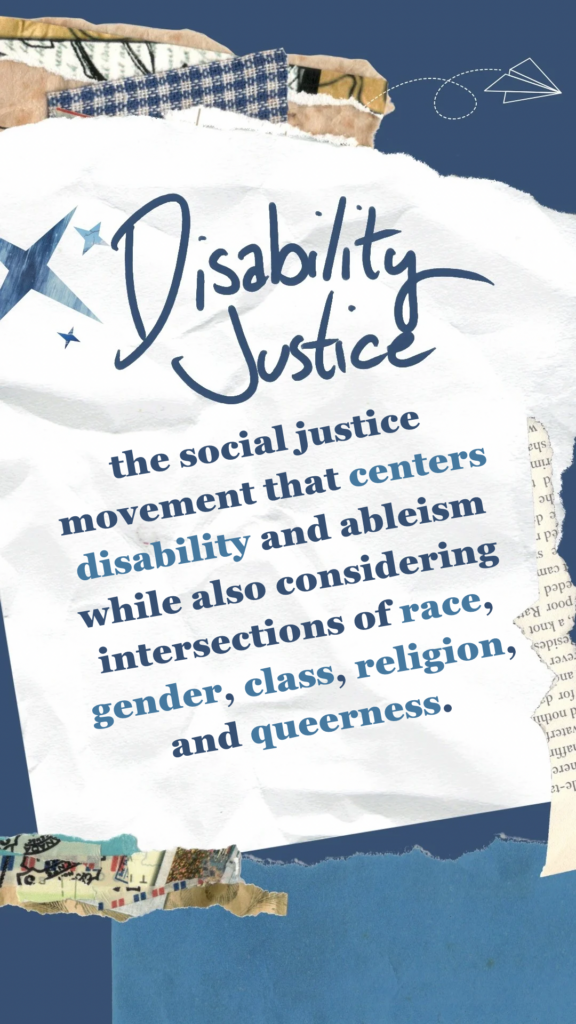
Disability Justice refers the social justice movement that centers disability and ableism while also considering intersections of race, gender, class, religion, and queerness.
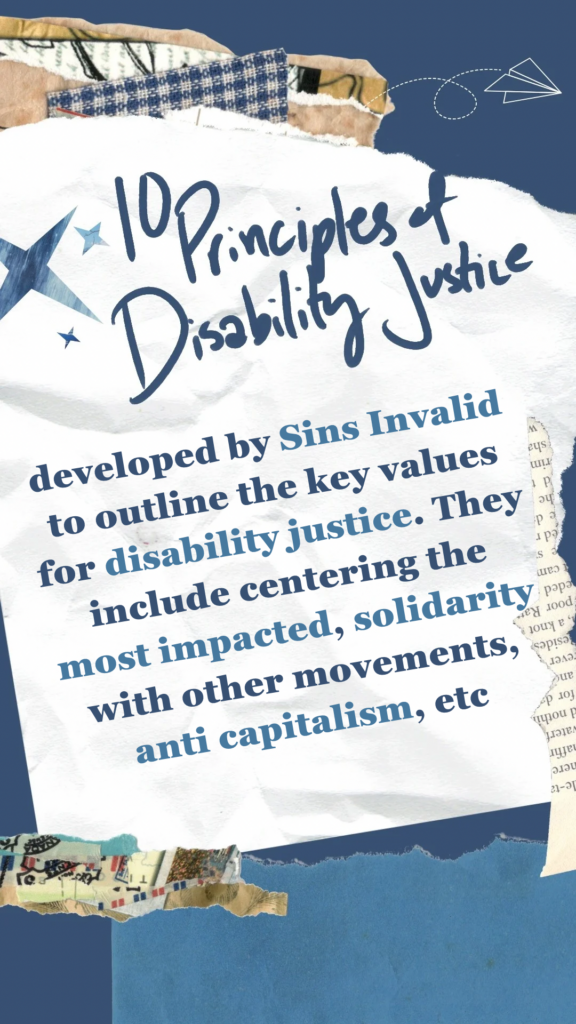
10 Principles of Disability Justice refers to the 10 statements developed by Sins Invalid to outline the key values for disability justice. They include centering the most impacted, solidarity with other movements, anti capitalism, etc
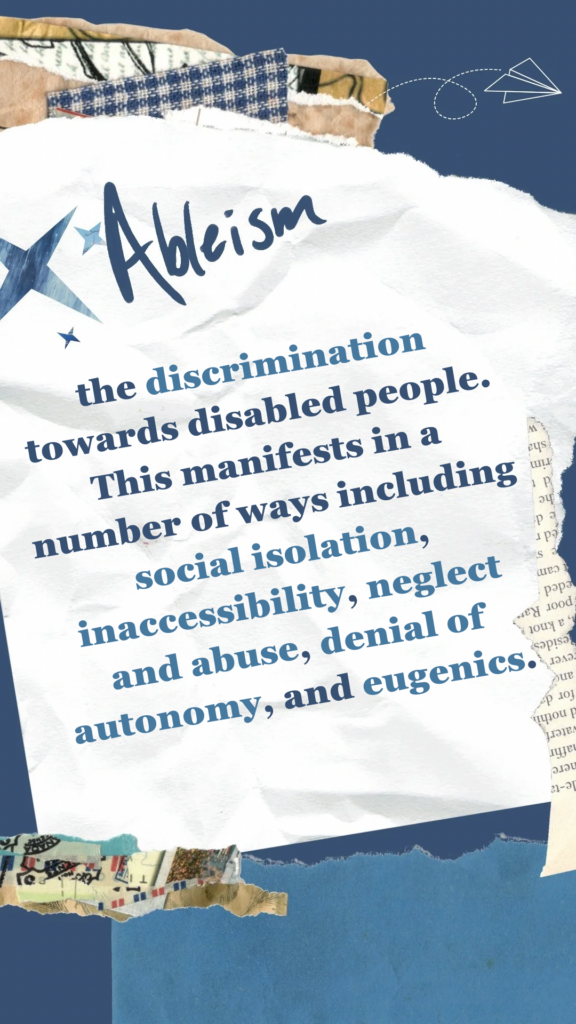
Ableism refers to the discrimination towards disabled people. This manifests in a number of ways including social isolation, inaccessibility, neglect and abuse, denial of autonomy, and eugenics.
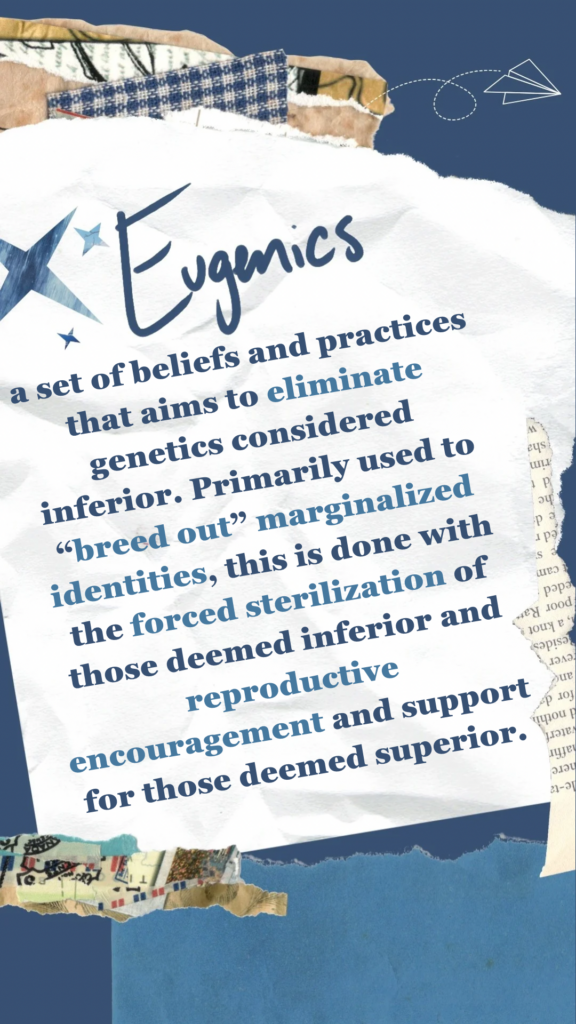
Eugenics refers to a set of beliefs and practices that aims to eliminate genetics considered inferior. Primarily used to “breed out” marginalized identities, this is done with the forced sterilization of those deemed inferior and reproductive encouragement and support for those deemed superior.
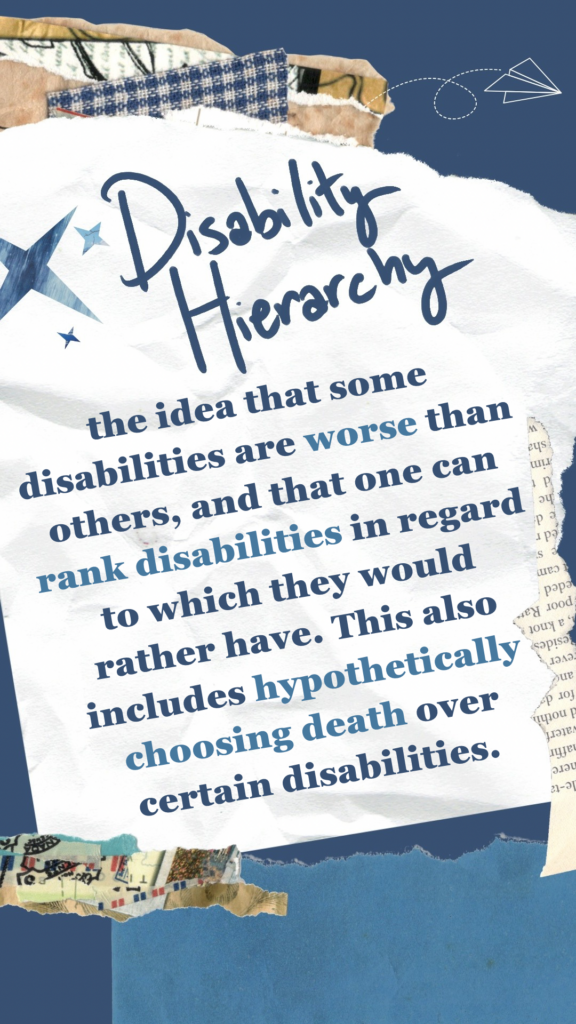
Disability Hierarchy refers to the idea that some disabilities are worse than others, and that one can rank disabilities in regard to which they would rather have. This also includes hypothetically choosing death over certain disabilities.
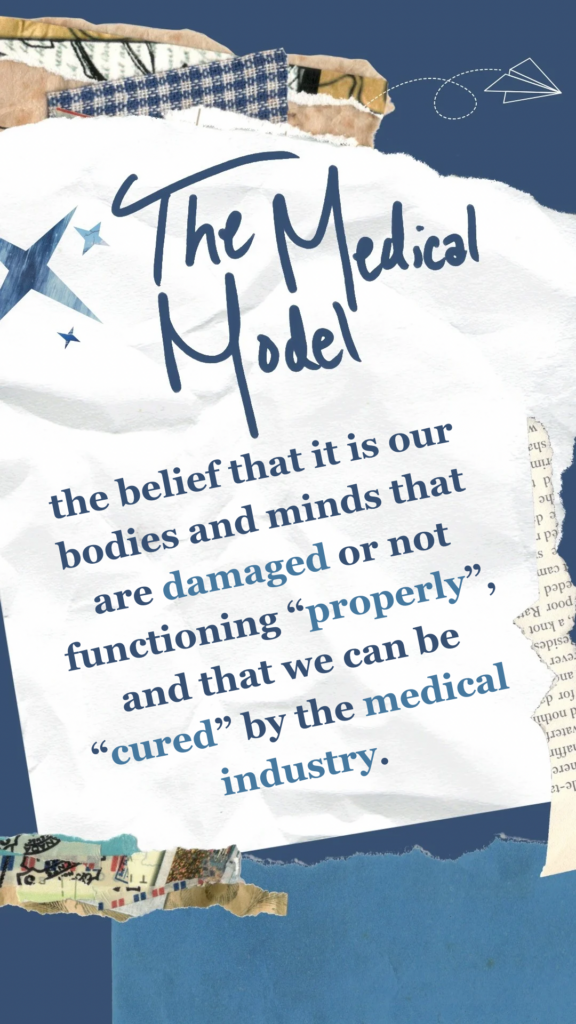
The Medical Model refers to the belief that it is our bodies and minds that are damaged or not functioning “properly”, and that we can be “cured” by the medical industry.
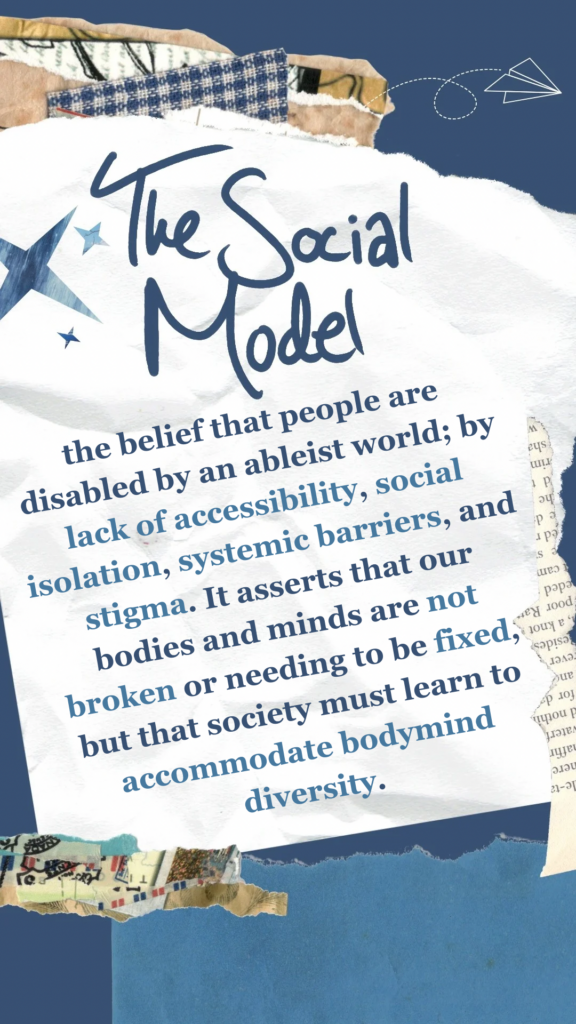
The Social Model refers to the belief that people are disabled by an ableist world; by lack of accessibility, social isolation, systemic barriers, and stigma. It asserts that our bodies and minds are not broken or needing to be fixed, but that society must learn to accommodate bodymind diversity.
Bodymind refers to the approach to understanding that the body and mind are a unified system, and rejects the western idea of the body and the mind being different and functioning separately.
Accessibility refers to the design of products, devices, services, vehicles, or environments to be usable by disabled people. This can look like ramps, wheelchairs, masks, canes, sign language interpretation, and practices like extended time to take exams or lack of deadlines for projects.
Disability Tax refers to the added financial burden experienced by disabled people. Healthcare costs, mobility aid prices, medication prices, expensive specialized diets, and other disability supplies costs make just keeping yourself alive more expensive than an able-bodied person. Similar to the “pink tax”, disability tax speaks directly to the way capitalism and disability intersect.
Disability Drift refers to the assumption that someone with one disability also has other disabilities. For example, assuming someone in a wheelchair is also hard of hearing, so you speak loudly at them.
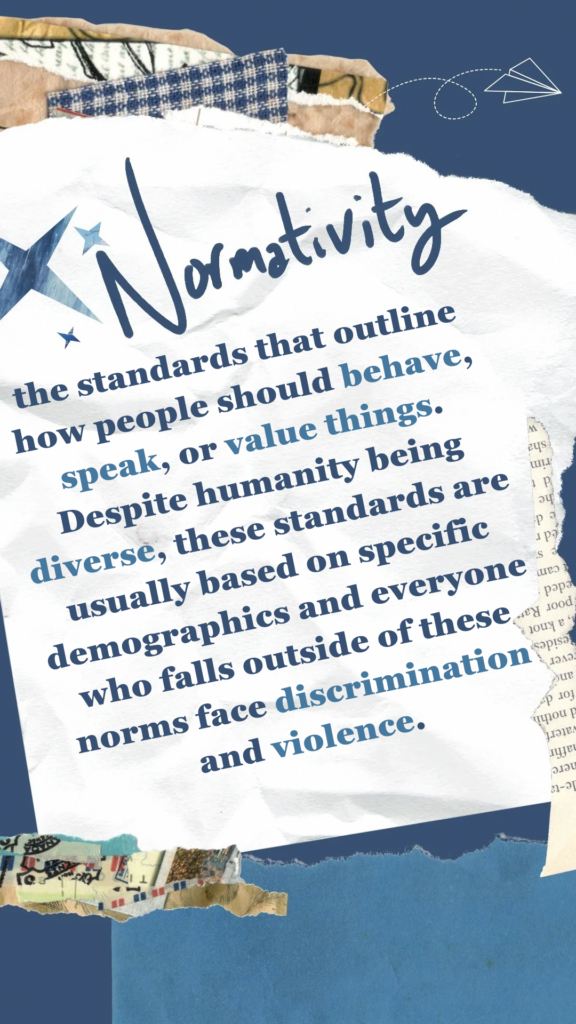
Normativity refers to the standards that outline how people should behave, speak, or value things. Despite humanity being diverse, these standards are usually based on specific demographics and everyone who falls outside of these norms face discrimination and violence.
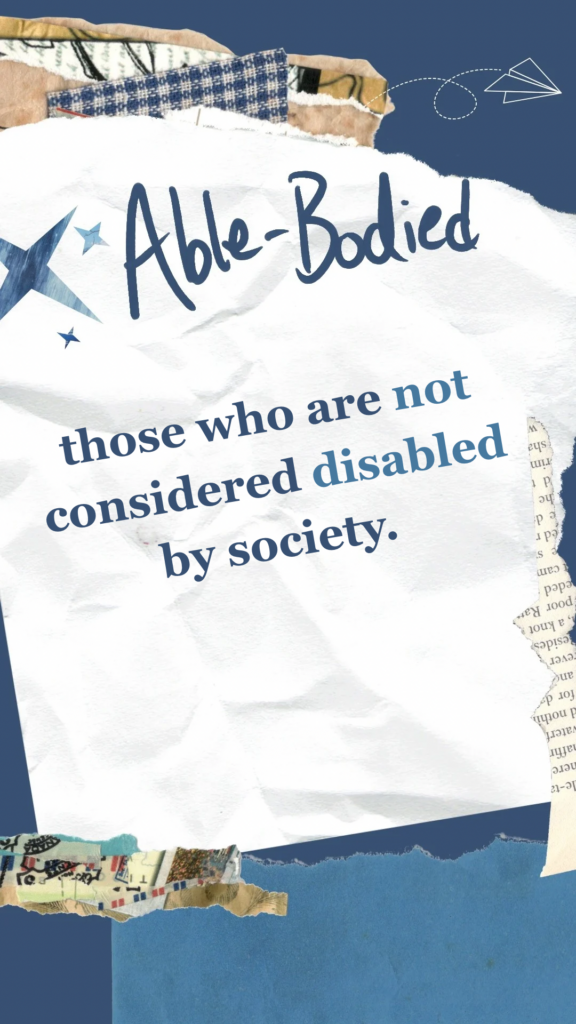
Able-Bodied refers to those who are not considered disabled by society.
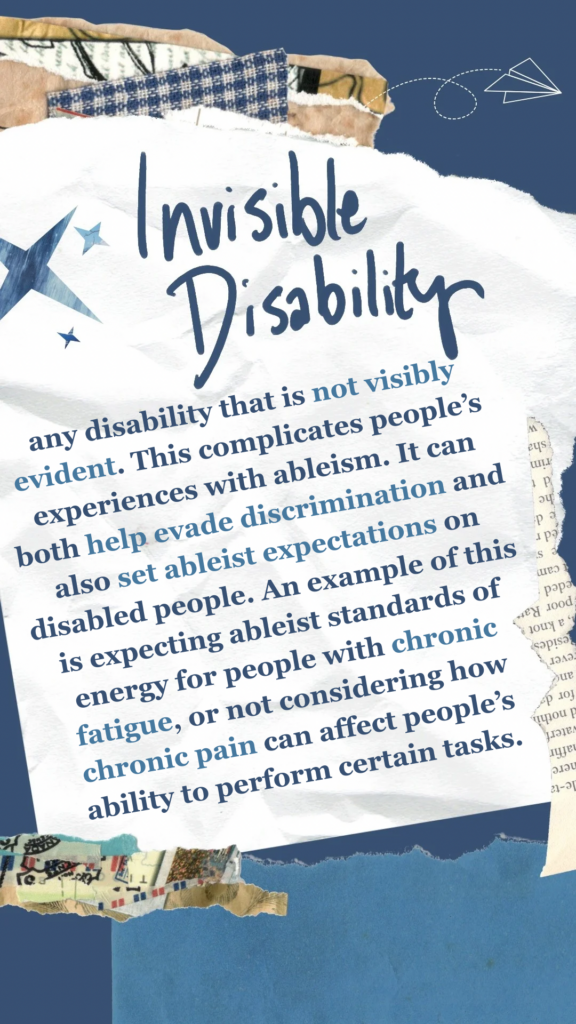
Invisible Disability refers to any disability that is not visibly evident. This complicates people’s experiences with ableism. It can both help evade discrimination and also set ableist expectations on disabled people. An example of this is expecting ableist standards of energy for people with chronic fatigue, or not considering how chronic pain can affect people’s ability to perform certain tasks.
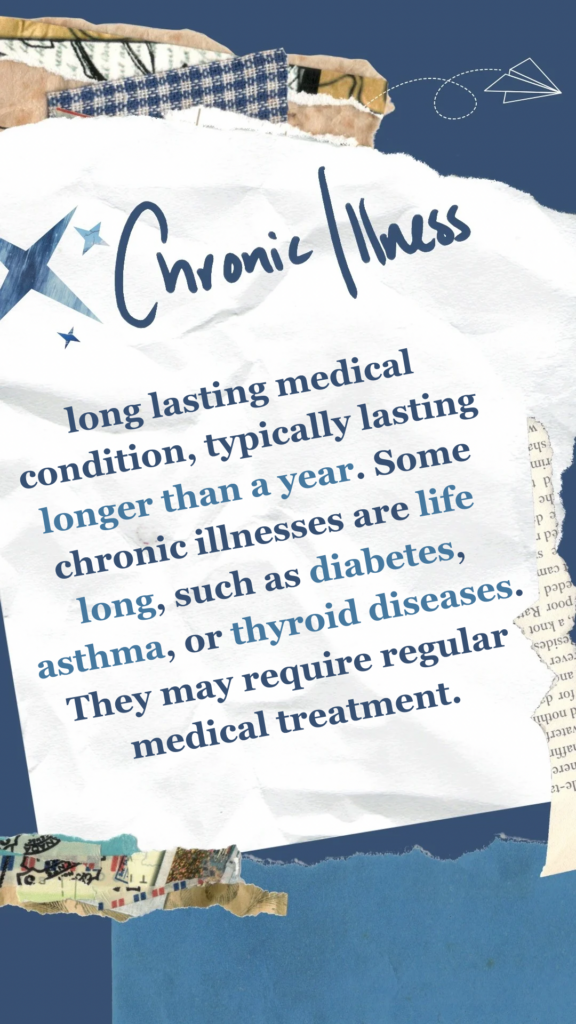
Chronic Illness refers to long lasting medical condition, typically lasting longer than a year. Some chronic illnesses are life long, such as diabetes, asthma, or thyroid diseases. They may require regular medical treatment.
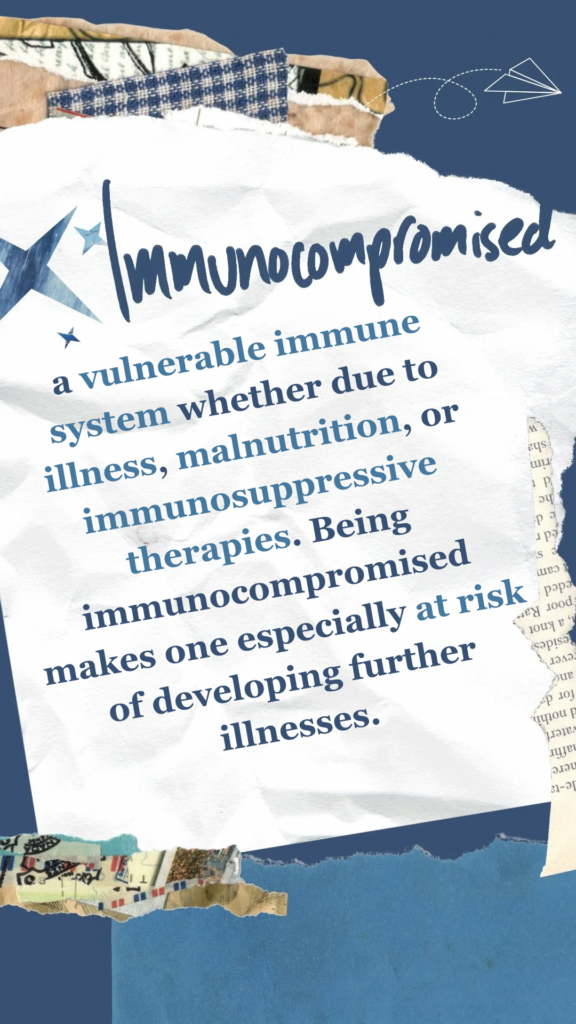
Immunocompromised refers to a vulnerable immune system whether due to illness, malnutrition, or immunosuppressive therapies. Being immunocompromised makes one especially at risk of developing further illnesses.
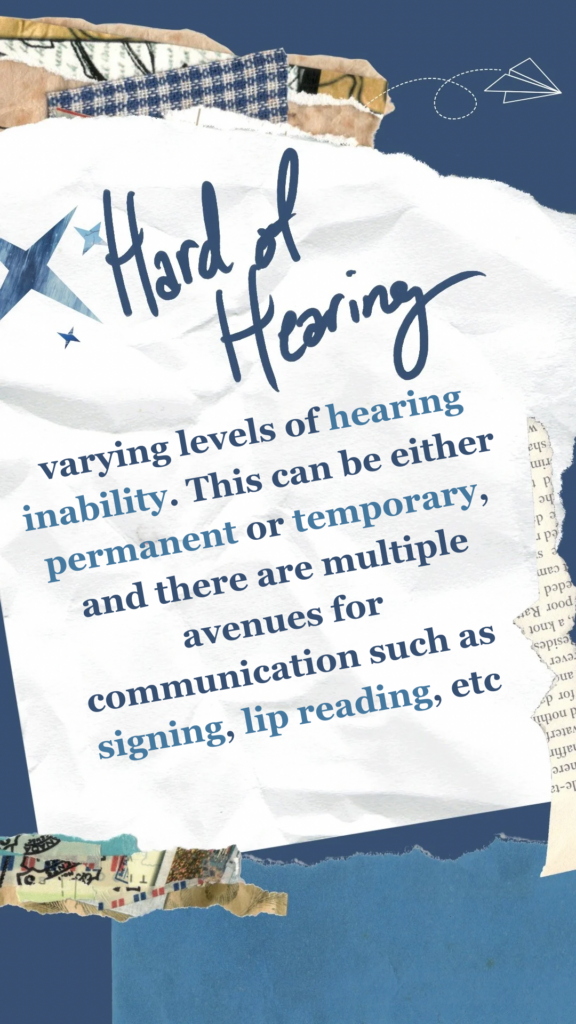
Hard of Hearing refers to varying levels of hearing inability. This can be either permanent or temporary, and there are multiple avenues for communication such as signing, lip reading, etc
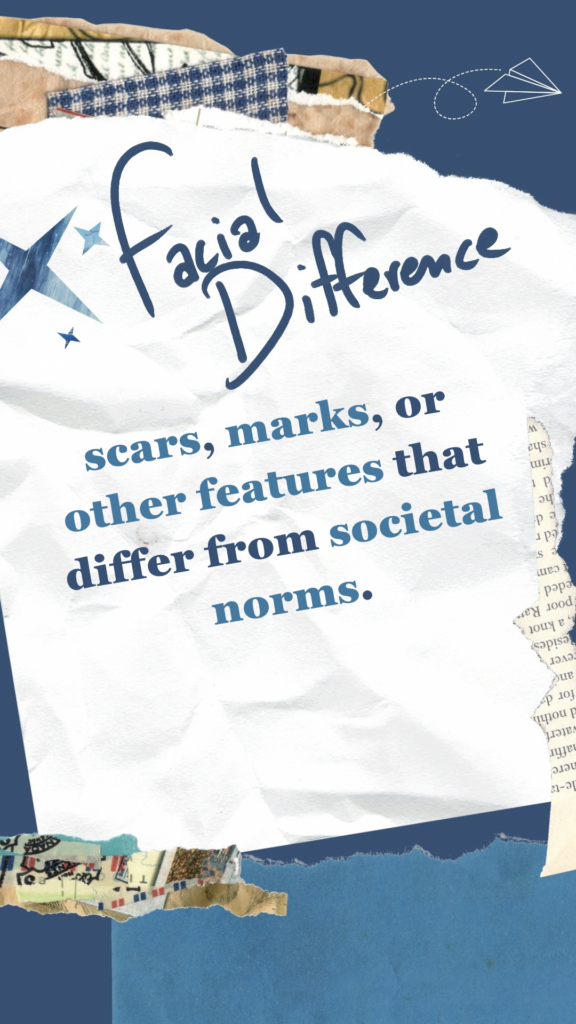
Facial Difference refers to scars, marks, or other features that differ from societal norms.
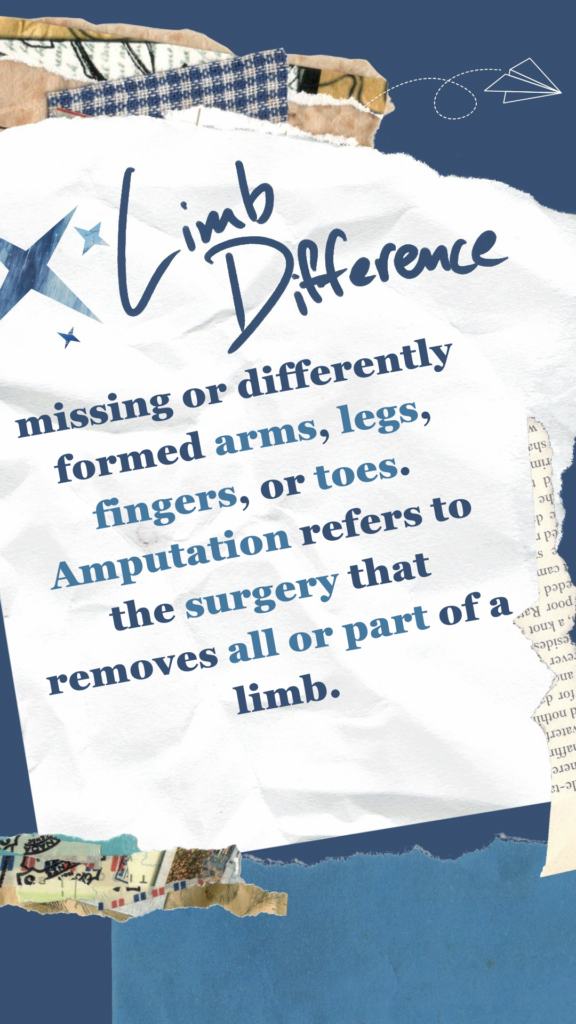
Limb Difference refers to missing or differently formed arms, legs, fingers, or toes. Amputation refers to the surgery that removes all or part of a limb.
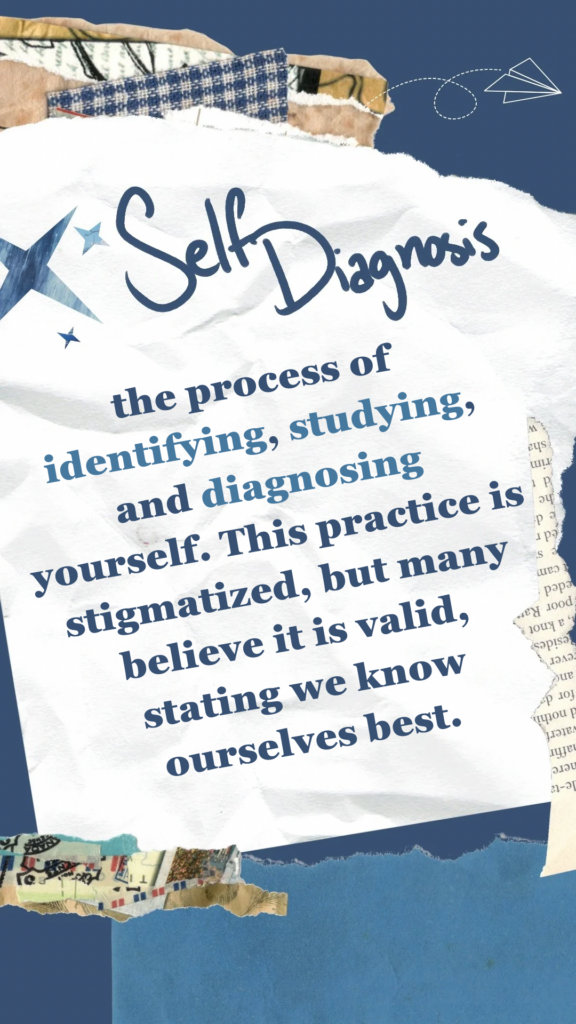
Self Diagnosis refers to the process of identifying, studying, and diagnosing yourself. This practice is stigmatized, but many believe it is valid, stating we know ourselves best.
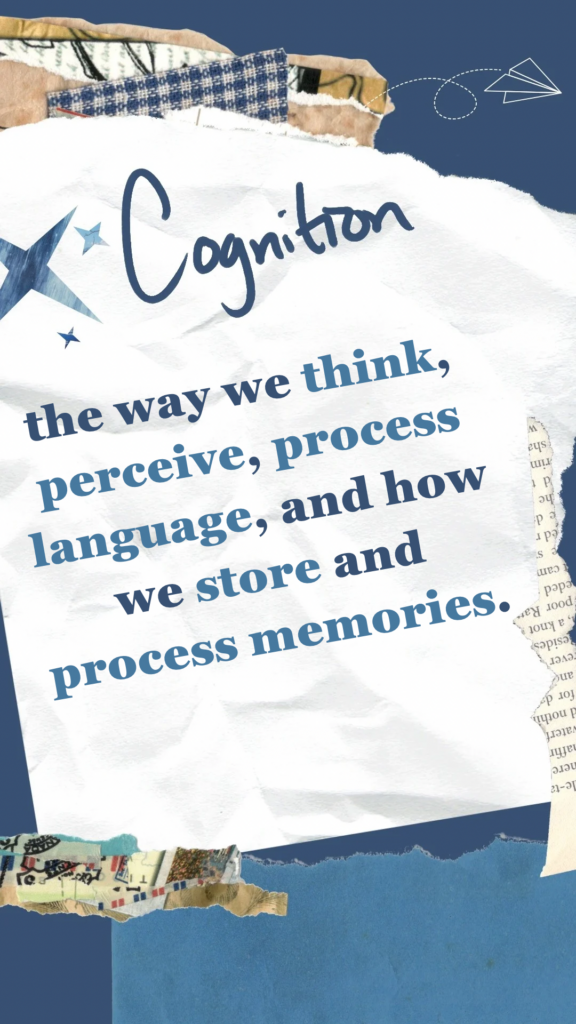
Cognition refers to the way we think, perceive, process language, and how we store and process memories.
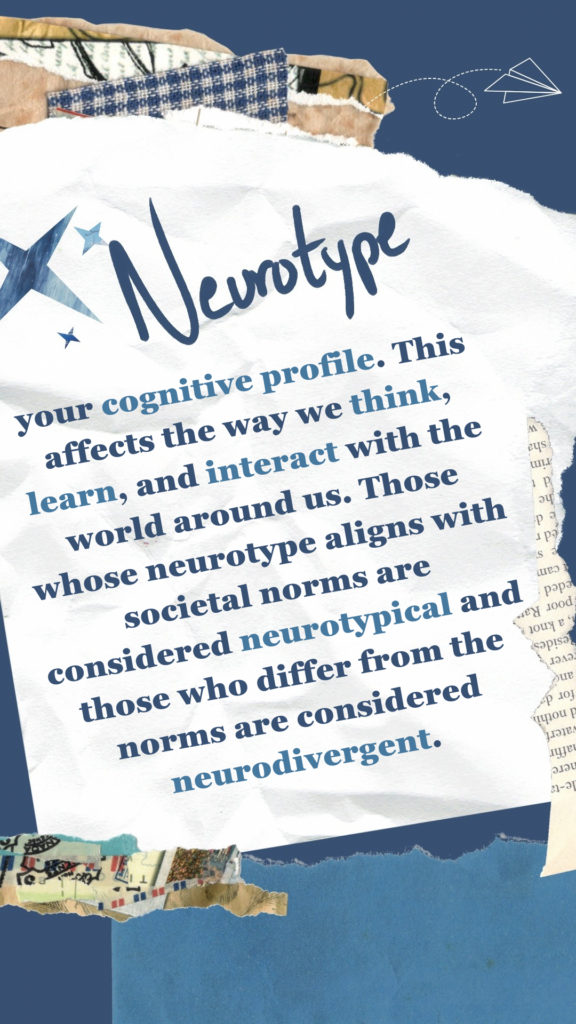
Neurotype refers to your cognitive profile. This affects the way we think, learn, and interact with the world around us. Those whose neurotype aligns with societal norms are considered neurotypical and those who differ from the norms are considered neurodivergent.
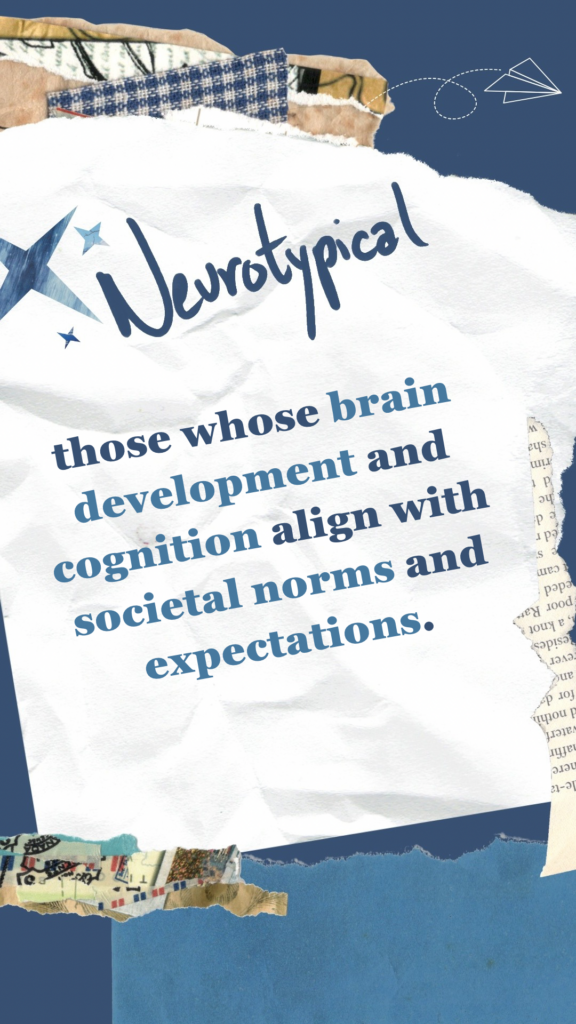
Neurotypical refers to those whose brain development and cognition align with societal norms and expectations.
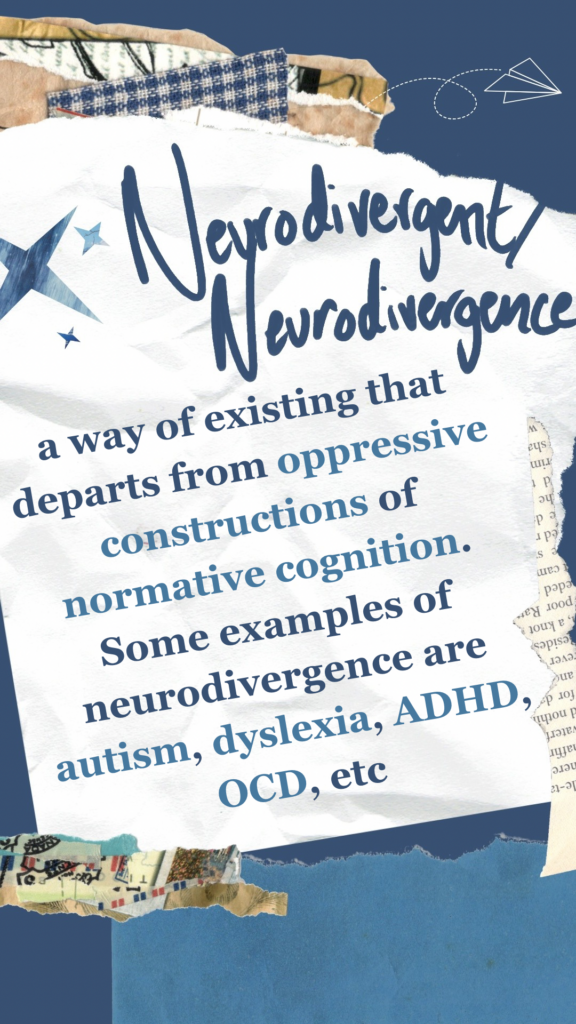
Neurodivergent/Neurodivergence refers to a way of existing that departs from oppressive constructions of normative cognition. Some examples of neurodivergence are autism, dyslexia, ADHD, OCD, etc
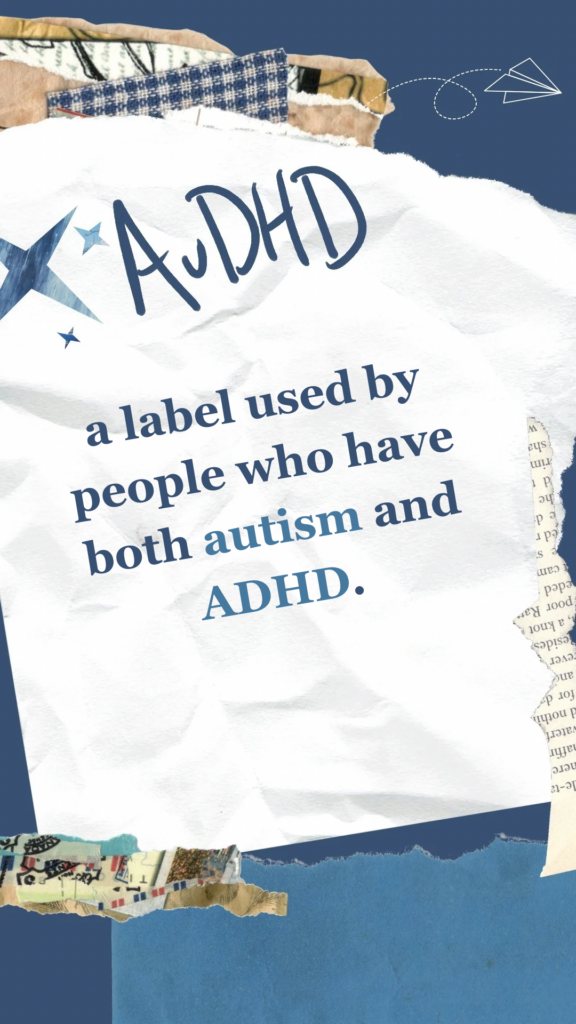
AuDHD refers to a label used by people who have both autism and ADHD.
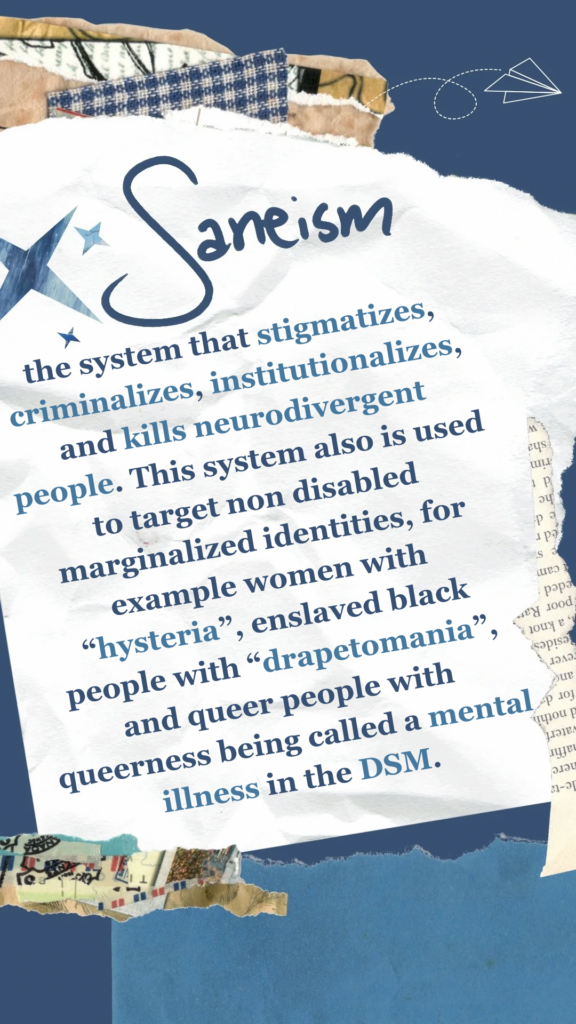
Saneism refers to the system that stigmatizes, criminalizes, institutionalizes, and kills neurodivergent people. This system also is used to target non disabled marginalized identities, for example women with “hysteria”, enslaved black people with “drapetomania”, and queer people with queerness being called a mental illness in the DSM.
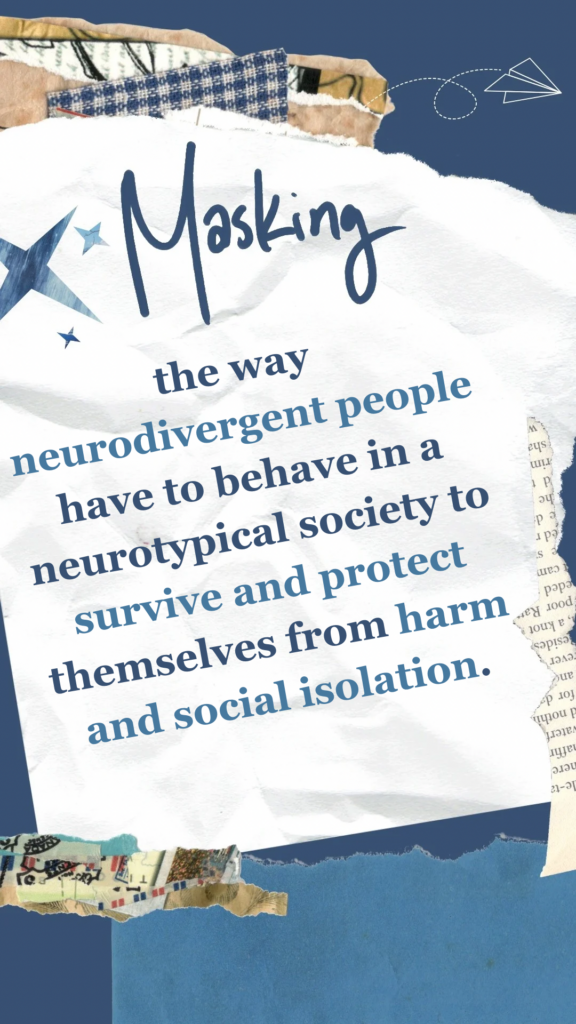
Masking refers to the way neurodivergent people have to behave in a neurotypical society to survive and protect themselves from harm and social isolation.
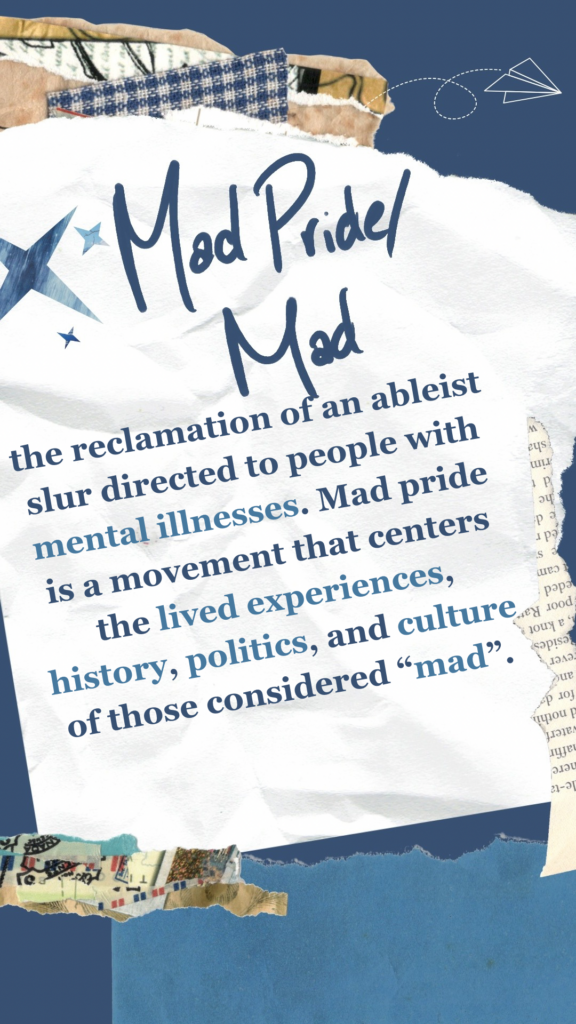
Mad Pride/Mad refers to the reclamation of an ableist slur directed to people with mental illnesses. Mad pride is a movement that centers the lived experiences, history, politics, and culture of those considered “mad”.
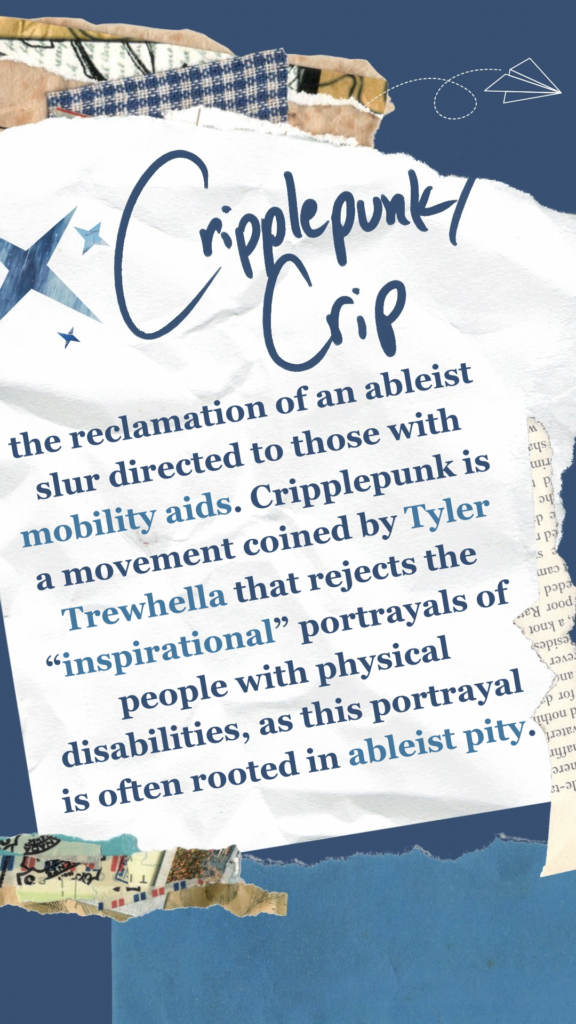
Cripplepunk/Crip refers to the reclamation of an ableist slur directed to those with mobility aids. Cripplepunk is a movement coined by Tyler Trewhella that rejects the “inspirational” portrayals of people with physically disabilities, as this portrayal is often rooted in ableist pity.
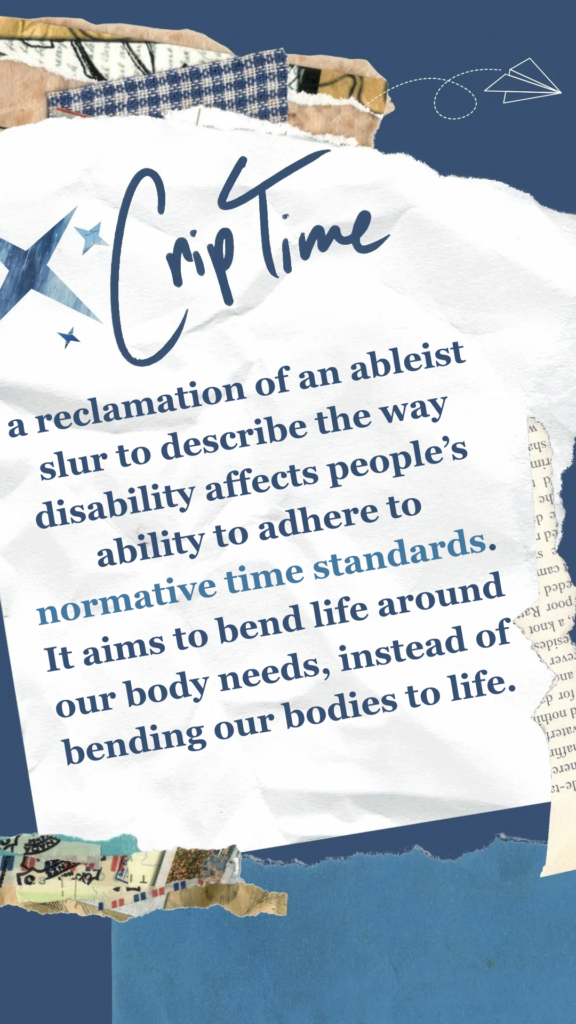
Crip Time refers to a reclamation of an ableist slur to describe the way disability affects people’s ability to adhere to normative time standards. It aims to bend life around our body needs, instead of bending our bodies to life.
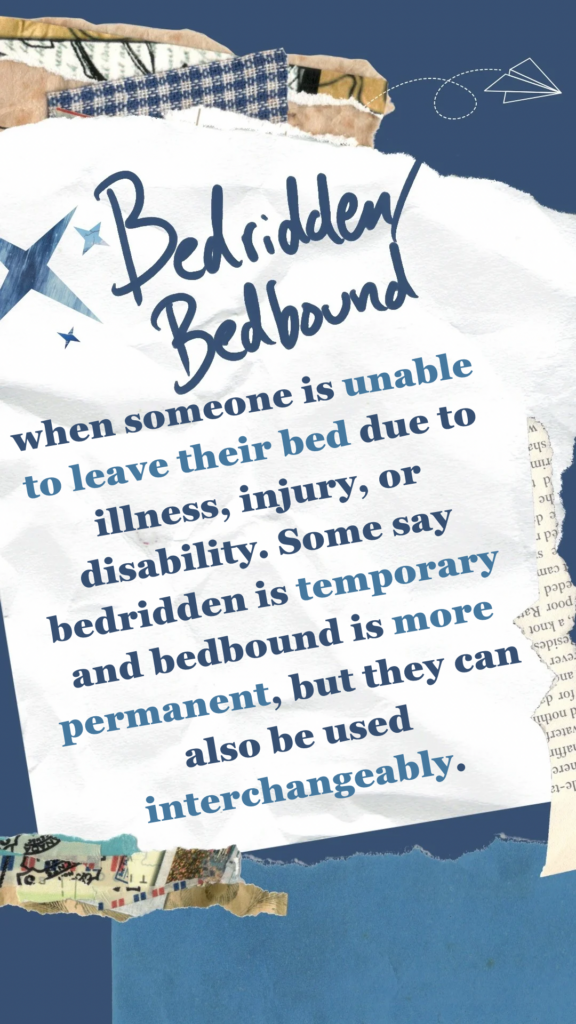
Bedridden/Bedbound refers to when someone is unable to leave their bed due to illness, injury, or disability. Some say bedridden is temporary and bedbound is more permanent, but they can also be used interchangeably.
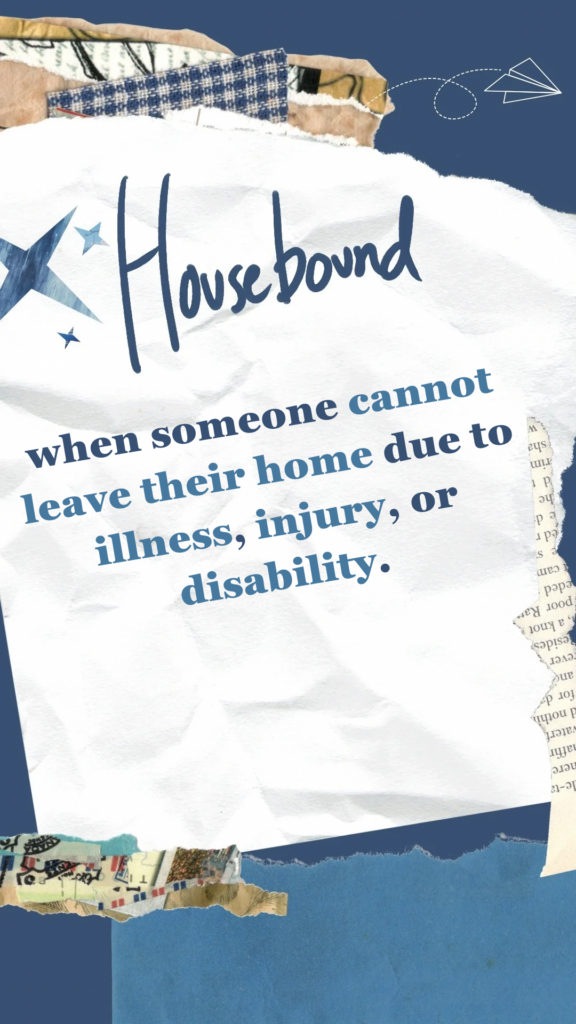
Housebound when someone cannot leave their home due to illness, injury, or disability.
Health Advocate refers to a person or persons/organization that helps disabled people navigate the medical industry. This can be a friend, roommate, family member, partner, organization, or living facility employee. They can aid in reducing ableism and hardship on disabled people who struggle with self advocacy.
Self Advocacy refers to the practice of disabled people taking control of their own healthcare and life decisions. Ableist ideas lead people to believe disabled people are not capable of autonomy.
Caregiver refers to the person who is primarily responsible for assisting a disabled person. This could be a hired home nurse, a family member, a roommate, or a partner.
Devotee refers to people who are attracted to disability. This can be considered a kink or a fetish and can look like anything from sexual attraction to a desire to experience disability themselves.
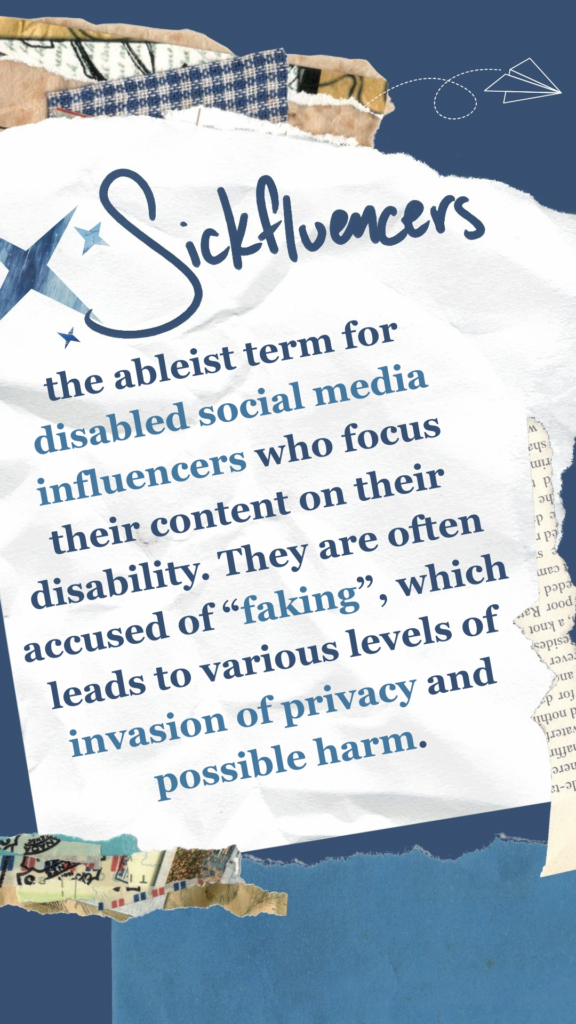
Sickfluencers refers to the ableist term for disabled social media influencers who focus their content on their disability. They are often accused of “faking”, which leads to various levels of invasion of privacy and possible harm.
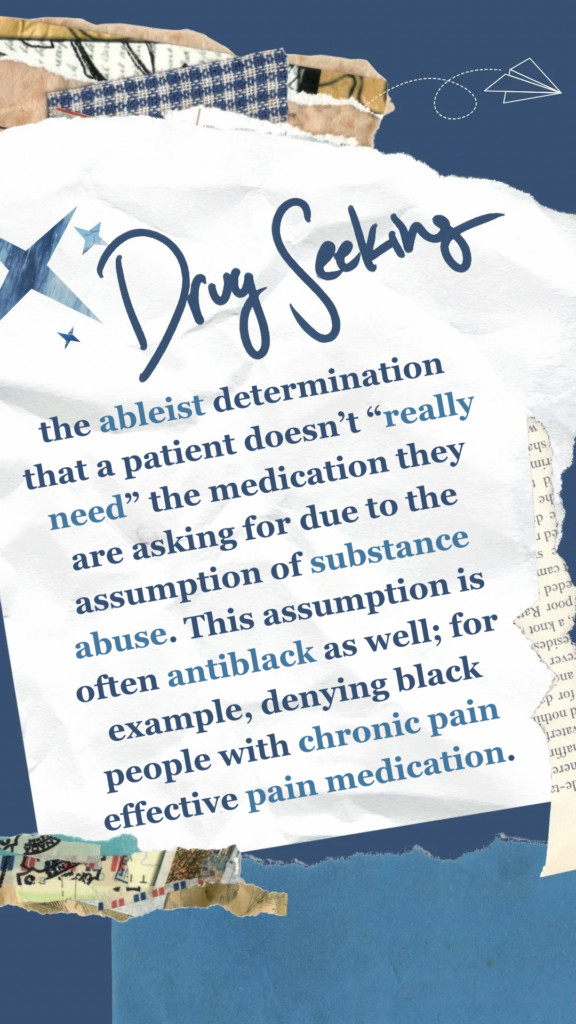
Drug Seeking refers to the ableist determination that a patient doesn’t “really need” the medication they are asking for due to the assumption of substance abuse. This assumption is often antiblack as well; for example, denying black people with chronic pain effective pain medication.
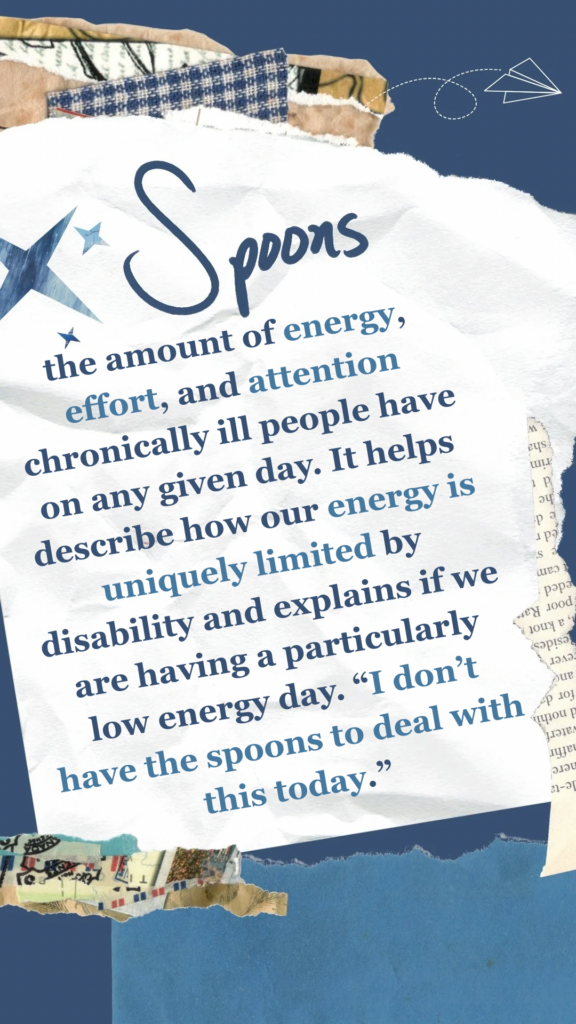
Spoons refers to the amount of energy, effort, and attention chronically ill people have on any given day. It helps describe how our energy is uniquely limited by disability and explains if we are having a particularly low energy day. “I don’t have the spoons to deal with this today.”
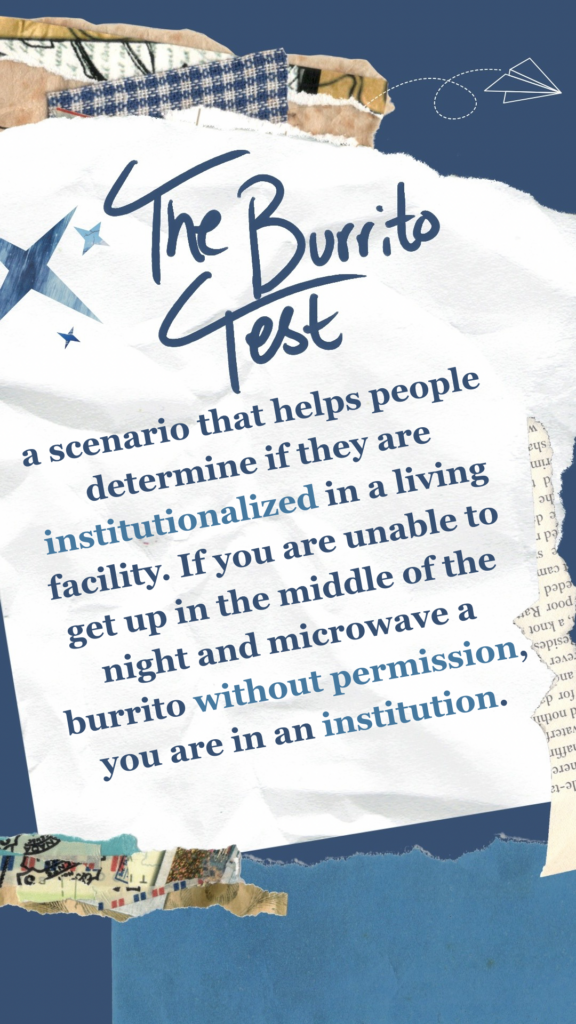
The Burrito Test refers to a scenario that helps people determine if they are institutionalized in a living facility. If you are unable to get up in the middle of the night and microwave a burrito without permission, you are in an institution.
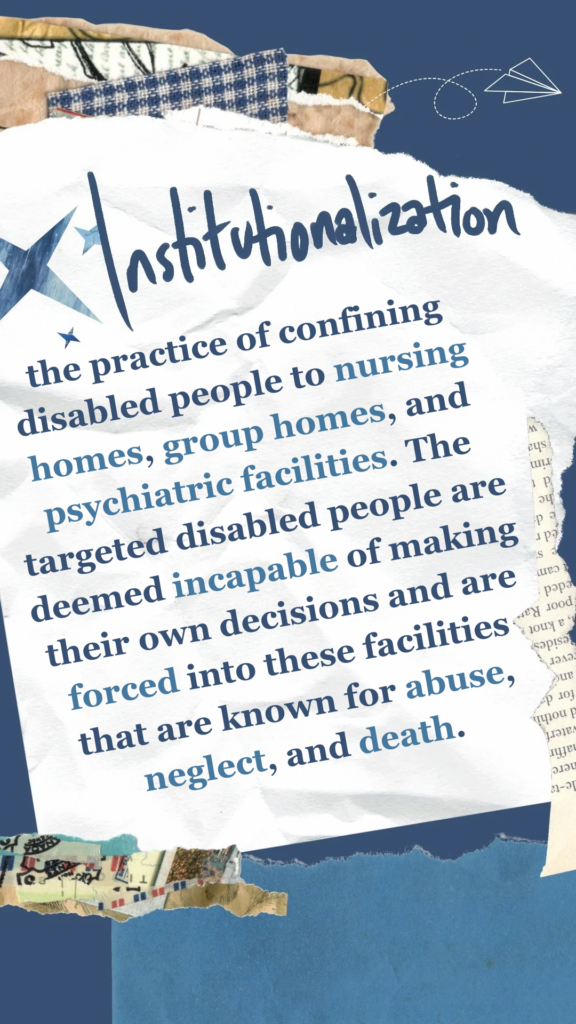
Institutionalization refers to the practice of confining disabled people to nursing homes, group homes, and psychiatric facilities. The targeted disabled people are deemed incapable of making their own decisions and are forced into these facilities that are known for abuse, neglect, and death.
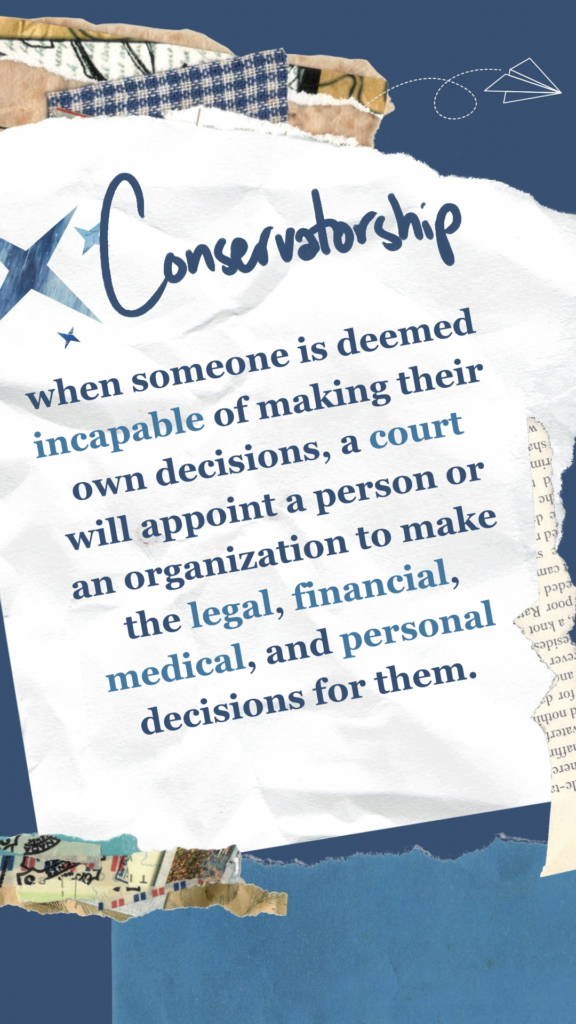
Conservatorship refers to when someone is deemed incapable of making their own decisions, a court will appoint a person or an organization to make the legal, financial, medical, and personal decisions for them.
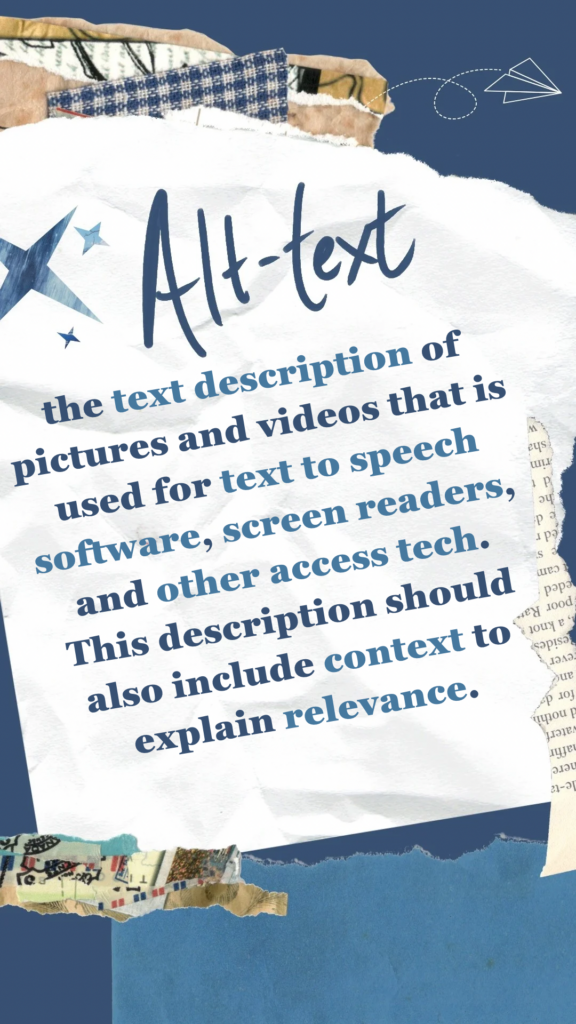
Alt Text refers to the text description of pictures and videos that is used for text to speech software, screen readers, and other access tech. This description should also include context to explain relevance.
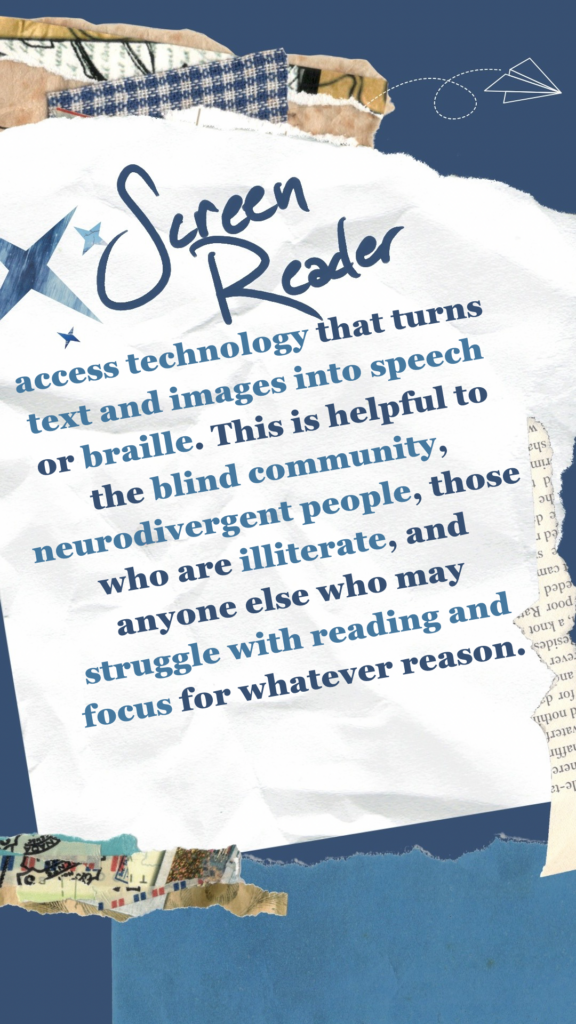
Screen Reader refers to access technology that turns text and images into speech or braille. This is helpful to the blind community, neurodivergent people, those who are illiterate, and anyone else who may struggle with reading and focus for whatever reason.
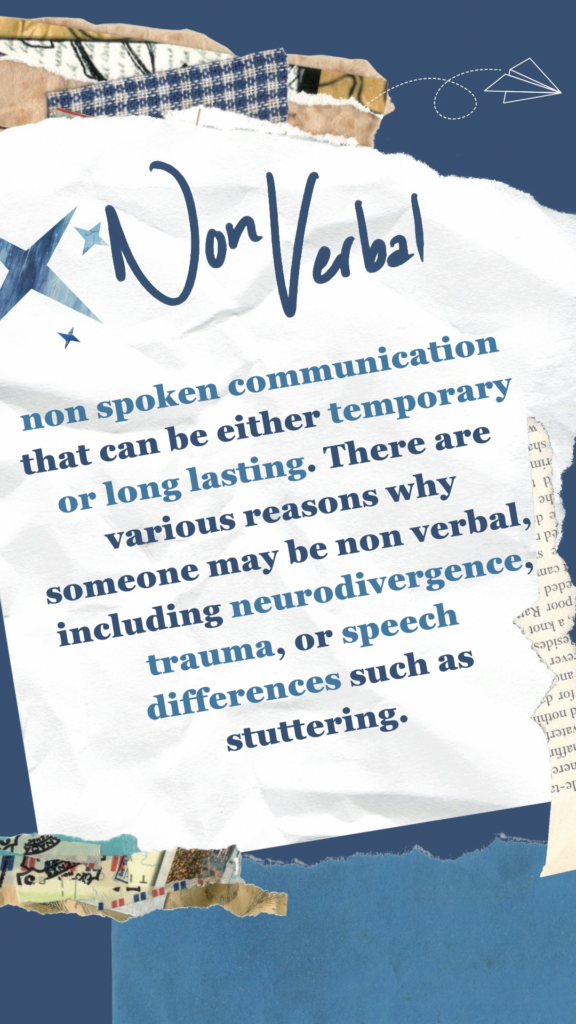
Non Verbal refers to non spoken communication that can be either temporary or long lasting. There are various reasons why someone may be non verbal, including neurodivergence, trauma, or speech differences such as stuttering.
Hearing People refers to people who are not a part of the Deaf community.
Sighted People refers to people who are not a part of the Blind community.
Argumentative and Alternative Communication refers to a device that helps people with speech or language difficulties communicate. These devices can be anything from a picture board to a machine that produces spoken language.
BSL/ASL refers to both Black Sign Language or British Sign Language and American Sign Language. Due to racism and segregation in America, the Black deaf community has limited access to learning ASL so they developed BSL to communicate.
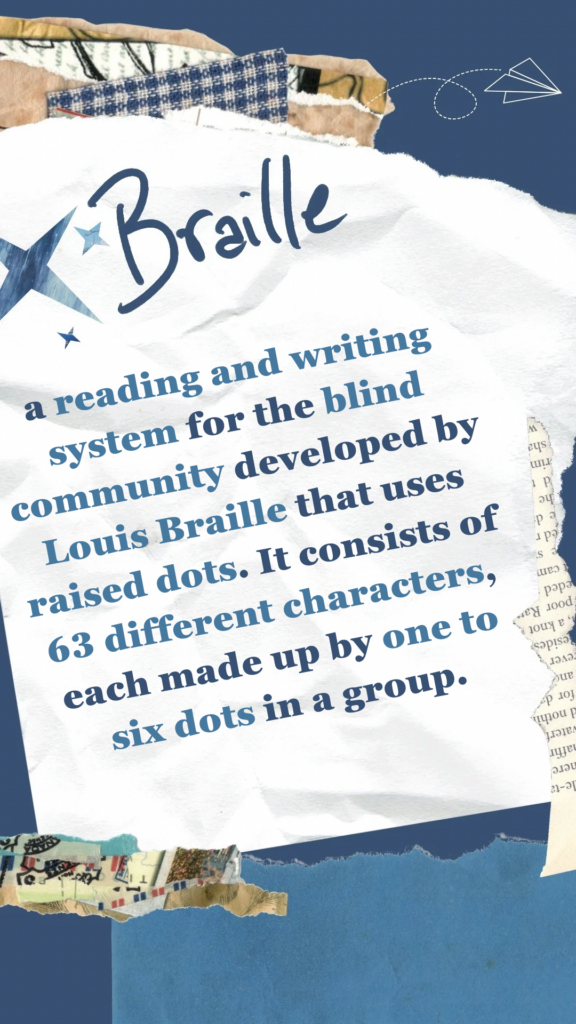
Braille refers to a reading and writing system for the blind community developed by Louis Braille that uses raised dots. It consists of 63 different characters, each made up by one to six dots in a group.
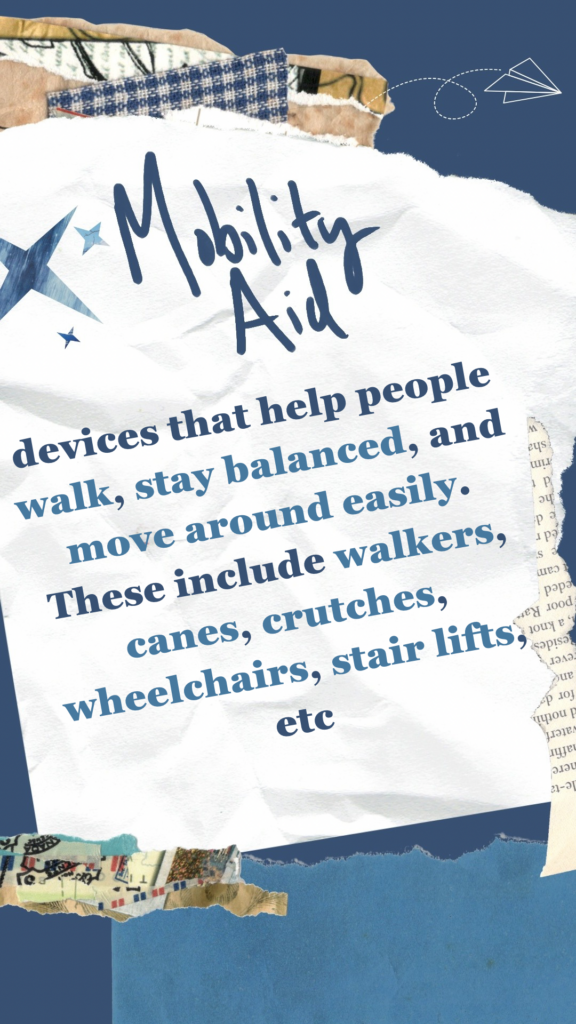
Mobility Aid refers to devices that help people walk, stay balanced, and move around easily. These include walkers, canes, crutches, wheelchairs, stair lifts, etc
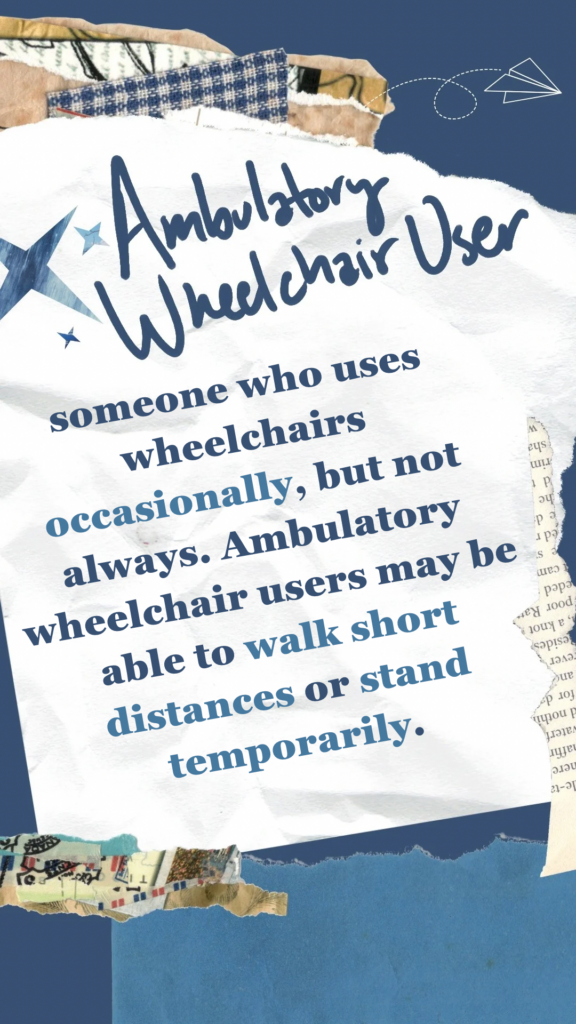
Ambulatory Wheelchair User refers to someone who uses wheelchairs occasionally, but not always. Ambulatory wheelchair users may be able to walk short distances or stand temporarily.

Posted in Uncategorized

Recent Posts

  • disability terminology zine

Recent Comments

No comments to show.

Archives

  • January 2026

Categories

  • Uncategorized
Powered by WordPress | Theme: Big Scene by hosted by Autistici/Inventati.